Tuesday, May 14, 2019

Tuesday, May 14 anaphora and epistrophe

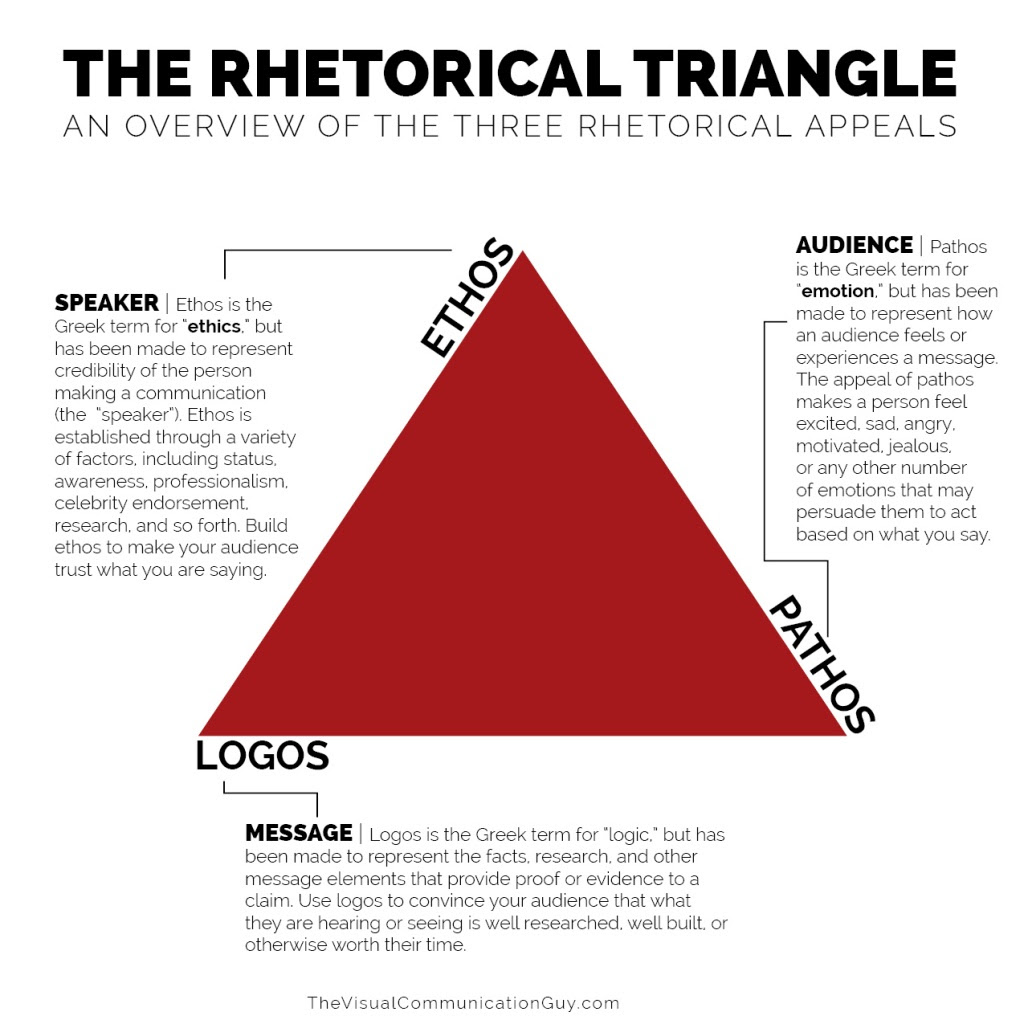
Image result for rhetorical triangle

Coming up: Rhetorical assessment on Monday, May 21.  You will be writing an argumentative essay.

Note: If you were absent yesterday, you will need to go onto the blog. There are four examples of the techniques used to make an argument: an excerpt from a speech by Barack Obama and three commericals. For each, identify the Aristotelian Technique and then provide support for either the speech or the commercial to support your answer. This was a graded assignment.

In class:  As a class we will review Queen Elizabeth's Speech at Tilbury, (class handout yesterday) followed by an exercise on anaphora and epistrophe (new class handout today)

Identify the following at to their Aristotelian device: logos, ethos or pathos. For each write why you made your selection.

1. “Woz and I started Apple in my parents garage when I was 20. We worked hard, and in 10 years Apple had grown from just the two of us in a garage into a $2 billion company with over 4000 employees. We had just released our finest creation — the Macintosh — a year earlier, and I had just turned 30...


2. "I am not unmindful that some of you have come here out of great trials and tribulations. Some of you have come fresh from narrow jail cells. And some of you have come from areas where your quest -- quest for freedom left you battered by the storms of persecution and staggered by the winds of police brutality. You have been the veterans of creative suffering. Continue to work with the faith that unearned suffering is redemptive. Go back to Mississippi, go back to Alabama, go back to South Carolina, go back to Georgia, go back to Louisiana, go back to the slums and ghettos of our northern cities, knowing that somehow this situation can and will be changed."

I Have a Dream by Martin Luther King Jr. August 28th, 1963.

3. "He is a forensics and ballistics expert for the federal 
government - if anyone's qualified to determine the 
murder weapon, it's him."


4."My three decades of experience in public service, my 

tireless commitment to the people of this community,

my willingness to reach across the aisle and cooperate 

with the opposition makes me an excellent 

candidate for mayor.


Name_______________________________

Directions: read through the following speech, 

noting whether the persuasive technique being used 

by Queen Elizabeth I is logos, ethos or pathos. 

Underline the phrase and write a “l”, “e” or “p” above.

Queen Elizabeth I’s Speech to the Troops at Tilbury,

 1588

My loving people, We have been persuaded by some that are careful of our safety, to take heed how we commit ourselves to armed multitudes, for fear of treachery; but I assure you I do not desire to live to distrust my faithful and loving people.

Let tyrants fear, I have always so behaved myself that, under God, I have placed my chiefest strength and safeguard in the loyal hearts and good-will of my subjects; and therefore I am come amongst you, as you see, at this time, not for my recreation and disport, but being resolved, in the midst and heat of the battle, to live and die amongst you all; to lay down for my God, and for my kingdom, and my people, my honour and my blood, even in the dust.

 I know I have the body but of a weak and feeble woman; but I have the heart and stomach of a king, and of a king of England too, and think foul scorn that Parma or Spain, or any prince of Europe, should dare to invade the borders of my realm; to which rather than any dishonour shall grow by me, I myself will take up arms, I myself will be your general, judge, and rewarder of every one of your virtues in the field.


 I know already, for your forwardness you have deserved rewards and crowns; and We do assure you in the word of a prince, they shall be duly paid you. In the mean time, my lieutenant general shall be in my stead, than whom never prince commanded a more noble or worthy subject; not doubting but by your obedience to my general, by your concord in the camp, and your valour in the field, we shall shortly have a famous victory over those enemies of my God, of my kingdom, and of my people.


WHAT IS ANAPHORA?

Anaphora is when the first word or series of words in a phrase, sentence, or clause repeats itself for emphasis.
The most famous anaphora that we’re all probably familiar with comes from the opening lines of Charles Dickens’s A Tale of Two Cities. You know, “It was the best of times, it was the worst of times…” etc.
Martin Luther King Jr. also used anaphora in his “I have a dream” speech, with the repetition of that famous phrase.

HOW ABOUT EPISTROPHE?

But what if the repetition happens at the end of the phrase/sentence/clause? Is there a term for that?
There sure is! That’s called epistrophe, or epiphora, or antistrophe. Take your pick; they’re all correct.
Examples of epistrophe appear in Abraham Lincoln’s Gettysburg Address ( “…and that government of the people, by the people, for the people, shall not perish from the earth.”), and in Lyndon B. Johnson’s “We Shall Overcome” speech (“There is no Negro problem. There is no Southern problem. There is no Northern problem. There is only an American problem.“1).

There’s even a song by Thelonious Monk called “Epistrophy”, which uses notes in a pattern of epistrophe. Like anaphora, epistrophe is used to add emphasis.
Your turn: identify the rhetorical device

1. “What the hammer? what the chain?
In what furnace was thy brain?
What the anvil? what dread grasp
Dare its deadly terrors clasp?”
2.  If you had known the virtue of the ring,
Or half her worthiness that gave the ring,
Or your own honour to contain the ring,
You would not then have parted with the ring.
The Merchant of Venice - William Shakespeare
3. “Every day, every night, in every way, I am getting better and better”

4. For no government is better than the men who compose it, and I want the best, and we need the best, and we deserve the best. -John F. Kennedy
5. The moth and the fish eggs are in their place,
The bright suns I see and the dark suns I cannot see are in their place,
The palpable is in its place and the impalpable is in its place.
Song of Myself - Whitman
6. “This blessed plot, this earth, this realm, this England,
This nurse, this teeming womb of royal kings [. . .]
This land of such dear souls, this dear dear land,”


7. “It was the best of times, it was the worst of times, it was the age of wisdom, it was the age of foolishness, it was the epoch of belief, it was the epoch of incredulity, it was the season of Light, it was the season of Darkness, it was the spring of hope, it was the winter of despair.”

8. The time for the healing of the wounds has come. The moment to bridge the chasms that divides us has come. - Nelson Mandela
9. When I was a child,
I spoke as a child,
I understood as a child,
I thought as a child.
Corinthians 13:11

10. If you liked it then you should've put a ring on it
Don't be mad once you see that he want it
If you liked it then you should've put a ring on it
Single Ladies - Beyonce

Sunday, May 12, 2019

Monday, May 13 day 2 rhetorical devices

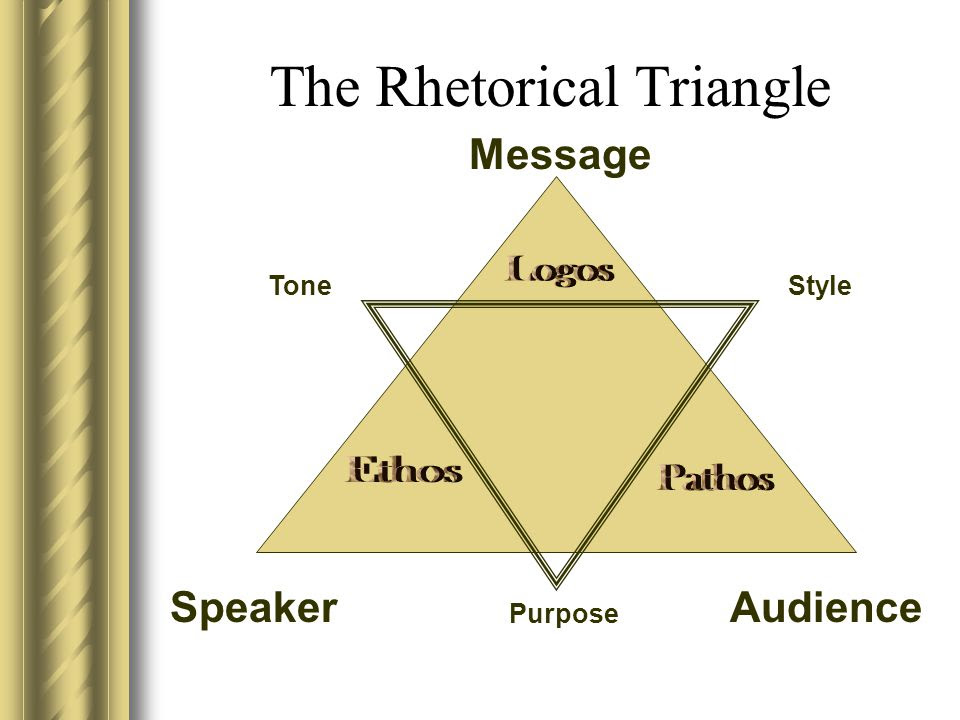
Image result for rhetorical triangle
Important: All grades are up-to-date, and you are receiving grade reports.

Anything you owed Ms. DiPerna cannot be changed. However, many of you are missing work from last week. This includes:

Friday's vocabulary quiz on rhetorical devices
Thursday's practice on prefixes
Wednesday's: rhetorical argument writing.


There are copies of these up front. If you care to remove your zero, handle it NOW!


In class:  review practice of the devices using last week's vocabulary.

  1. A host, of golden daffodils; / Beside the lake, beneath the trees,/ Fluttering and dancing In the breeze 

2. “So, I ask you, dear reader, what would you have me do?”

3. ”Just as a caterpillar comes out of its cocoon, so we must come out of our comfort zone.”

4.  “This car goes faster than the speed of light.”

5.A character steps out into a hurricane and says, “What nice weather we’re having!”

 6. “My life is my purpose. My life is my goal. My life is my inspiration.” inspite of the pouring rain, they continued on their journey.

 7. A host, of golden daffodils; / Beside the lake, beneath the trees,/ Fluttering and dancing In the breeze.

8.“Doctors all over the world recommend this type of treatment.”

9.“I swear to tell the truth, the whole truth, and nothing but the truth.”  

10. On the half sheet of paper on your desk, identify the rhetorical device used, giving specific support for your reasoning with a minimum of two textual examples. (Remember your audience!)

Let me start with the economy, and a basic fact: The United States of America, right now, has the strongest, most durable economy in the world. We’re in the middle of the longest streak of private sector job creation in history. More than 14 million new jobs, the strongest two years of job growth since the ‘90s, an unemployment rate cut in half. Our auto industry just had its best year ever. That’s just part of a manufacturing surge that’s created nearly 900,000 new jobs in the past six years. And we’ve done all this while cutting our deficits by almost three-quarters            Barak Obama
We did not finish  up identifying the following commercials on Friday.
For each of the following three commercials. Identify the type of rhetorical devices being used and support your reasoning with evidence from the commercial.


analysis of Queen Elizabeth's speech (class handout / copy below)


Name_______________________________
Directions: read through the following speech, noting whether the persuasive technique being used by Queen Elizabeth I is logos, ethos or pathos. Underline the phrase and write a “l”, “e” or “p” above.
Queen Elizabeth I’s Speech to the Troops at Tilbury, 1588

My loving people, We have been persuaded by some that are careful of our safety, to take heed how we commit ourselves to armed multitudes, for fear of treachery; but I assure you I do not desire to live to distrust my faithful and loving people.
Let tyrants fear, I have always so behaved myself that, under God, I have placed my chiefest strength and safeguard in the loyal hearts and good-will of my subjects; and therefore I am come amongst you, as you see, at this time, not for my recreation and disport, but being resolved, in the midst and heat of the battle, to live and die amongst you all; to lay down for my God, and for my kingdom, and my people, my honour and my blood, even in the dust.
 I know I have the body but of a weak and feeble woman; but I have the heart and stomach of a king, and of a king of England too, and think foul scorn that Parma or Spain, or any prince of Europe, should dare to invade the borders of my realm; to which rather than any dishonour shall grow by me, I myself will take up arms, I myself will be your general, judge, and rewarder of every one of your virtues in the field.

 I know already, for your forwardness you have deserved rewards and crowns; and We do assure you in the word of a prince, they shall be duly paid you. In the mean time, my lieutenant general shall be in my stead, than whom never prince commanded a more noble or worthy subject; not doubting but by your obedience to my general, by your concord in the camp, and your valour in the field, we shall shortly have a famous victory over those enemies of my God, of my kingdom, and of my people.


Friday, May 10, 2019

Friday, May 10 Rhetorical devices day 1

Image result for rhetorical triangle speaker audience subject

In class: vocabulary quiz  (another copy below; original handout on Tuesday, April 30
In class:.We are continuing to look at more examples of the use of rhetorical devices.

Disney and rhetorical devices  4:29

1. What needs to be present in order for a speech to occur?
        
2. Why is it important  to identify the audience for speeches?

persuasive techniques - having it your way
8:30

What persuasive technique is used in these commercials?  logos, ethos, pathos?
What is the message? Who is the audience? Who is the speaker?

1. Australian commercial
2. student commercial
 3.Chrysler superbowl


Device                                   Definition
1.      anaphora             the repetition of a word or phrase at the beginning of successive clauses
2.      epistrophe         the repetition of a word at the end of each phrase or clause: “I swear to tell the truth, the whole truth, and nothing but the truth.”
3.      analogy                 the comparison of two pairs that have the same relationship. The key is to ascertain the relationship between the first so you can choose the correct second pair. Part to whole, opposites, results of are types of relationships you should find
4.      apostrophe    interruption of thought to directly address a person or a personification: “So, I ask you, dear reader, what would you have me do?”
5.      * imagery                 language that evokes one or all of the five senses: seeing, hearing, tasting, smelling 
                                   touching
6.        counterpoints   contrasting ideas such as black/white, darkness/light, good/bad
7.       * hyperbole          exaggeration or overstatement
8.       irony   an expression, often humorous or sarcastic, that exposes perversity or absurdity
Aristotelian Appeals
9.   logos  appeals to the head using logic, numbers, explanations, and facts. Through Logos, a writer aims at a person's intellect. The idea is that if you are logical, you will understand
10.    ethos  appeals to the conscience, ethics, morals, standards, values, principles

11. pathos  appeals to the heart, emotions, sympathy, passions, sentimentality.

Thursday, May 9, 2019

Thursday, May 9 Practice exercises with prefixes


In class: we will continue with the rhetorical unit tomorrow. Please complete the exercises on prefixes. This will count in the homework category and in lieu of a vocabulary quiz. It is due at the close of class. If you are absent and reading this at home, please write the responses and send them along: 2006630.


Wednesday, May 8, 2019

Wednesday, May 8 Introduction to rhetorical devices


Ms. Belair and Ms. Rudy haver created a google classroom page for all your senior year planning needs. Make sure to check this routinely. This year's prom information is here. The policy for juniors is not the same as for seniors.
          class of 2020
          class code 912yid


In class: introduction to rhetorical devices. Practice as a group and individual practice (class handout / copy below) 
Coming up: vocabulary quiz on rhetorical terms this Friday.Class handout //copy below                     
1.      A child is shown covered in bug bites after using an inferior bug spray.____________________
2.      Tiger Woods endorses Nike. ______________________________
3.      Sprite Zero is 100% sugar-free. ______________________________
4.      A 32-oz. bottle of Tides holds enough to wash 32 loads.____________________________
5.      A commercial shows an image of a happy couple riding in a Corvette.______________________
6.      Cardiologists recommend Ecotrin more than any other brand of aspirin._______________________
7.      Advil Liquid-Gels provide up to 8 hours of continuous pain relief. ___________________________
8.      Beyonce appears in Oreo advertisements. ________________________________
9.      People who need more energy drink Red Bull Energy Drink. _____________________________
10.  A magazine ad shows people smiling while smoking cigarettes. _______________________
11.  If you don't buy this life insurance, you are letting your family down. ____________________
12.  As a Doctor, I can say that this product will certainly improve your health. __________________
13.  This product works 45% better than the leading brand. ________________________________

           Using a combination of  two of the  rhetorical devices of logos, ethos and pathos, write 3 to 5 persuasive sentences for each of the following prompts. Remember that for each your sentence must be able to stand independently with a clear thesis. Be mindful of language conventions.


1.  You are trying to persuade your mother to let you get a tattoo.

___________________________________________________________________________________

____________________________________________________________________________________

2.  You are attempting to convince a friend to join your sports team.

____________________________________________________________________________________

____________________________________________________________________________________

3.  You are attempting to convince your class that they shouldn’t drink and drive.

____________________________________________________________________________________

________________________________________________________________________________


Device                                   Definition
1.      anaphora             the repetition of a word or phrase at the beginning of successive clauses
2.      epistrophe         the repetition of a word at the end of each phrase or clause: “I swear to tell the truth, the whole truth, and nothing but the truth.”
3.      analogy                 the comparison of two pairs that have the same relationship. The key is to ascertain the relationship between the first so you can choose the correct second pair. Part to whole, opposites, results of are types of relationships you should find
4.      apostrophe    interruption of thought to directly address a person or a personification: “So, I ask you, dear reader, what would you have me do?”
5.      * imagery                 language that evokes one or all of the five senses: seeing, hearing, tasting, smelling 
                                   touching
6.        counterpoints   contrasting ideas such as black/white, darkness/light, good/bad
7.       * hyperbole          exaggeration or overstatement
8.       irony   an expression, often humorous or sarcastic, that exposes perversity or absurdity
Aristotelian Appeals
9.   logos  appeals to the head using logic, numbers, explanations, and facts. Through Logos, a writer aims at a person's intellect. The idea is that if you are logical, you will understand
10.    ethos  appeals to the conscience, ethics, morals, standards, values, principles
11. pathos  appeals to the heart, emotions, sympathy, passions, sentimentality.


Tuesday, May 7, 2019

Tuesday, May 7 Naviance presentation: college readiness


NAVIANCE DAY WITH THE COUNSELLORS

Remember to study for your rhetorical vocabulary quiz, which is this FRIDAY!


Rhetoric is a technique of using language effectively and persuasively in spoken or written form. It is an art of discourse, which studies and employs various methods to convince, influence or please an audience.

What are rhetorical devices? Rhetorical devices are strategies used to put forth your argument. Note that figurative language devices (those marked with an asterisk below) are common rhetorical language devices


Device                                   Definition
1.      anaphora             the repetition of a word or phrase at the beginning of successive clauses
2.      epistrophe         the repetition of a word at the end of each phrase or clause: “I swear to tell the truth, the whole truth, and nothing but the truth.”
3.      analogy                 the comparison of two pairs that have the same relationship. The key is to ascertain the relationship between the first so you can choose the correct second pair. Part to whole, opposites, results of are types of relationships you should find
4.      apostrophe    interruption of thought to directly address a person or a personification: “So, I ask you, dear reader, what would you have me do?”
5.      * imagery                 language that evokes one or all of the five senses: seeing, hearing, tasting, smelling 
                                   touching
6.        counterpoints   contrasting ideas such as black/white, darkness/light, good/bad
7.       * hyperbole          exaggeration or overstatement
8.       irony   an expression, often humorous or sarcastic, that exposes perversity or absurdity

Aristotelian Appeals
9.   logos  appeals to the head using logic, numbers, explanations, and facts. Through Logos, a writer aims at a person's intellect. The idea is that if you are logical, you will understand
10.    ethos  appeals to the conscience, ethics, morals, standards, values, principles


11. pathos  appeals to the heart, emotions, sympathy, passions, sentimentality.

Monday, May 6, 2019

Thursday/ Friday/ Monday May 2 and 3 and 6 powerpoint presentations


Coming up: vocabulary quiz on rhetorical devices May 10. (another copy below of the handout)
                   Powerpoint presentations Thursday / Friday
                   Counselors coming in next Tuesday to work with your college naviance accounts


Rhetorical Devices vocabulary  quiz on Friday, May 10
 In class powerpoint presentations, based upon your annotated bibliographies. (class handout / copy below)


Power Point presentation to align with annotated bibliography
In class work for Tuesday, April 30 and Wednesday, May 1
Presentation to be shared on Thursday, May 2 and Friday, May 3
Directions:
You will have a total of 6 slides. All slides must have an off-white background, no bright white
Slide 1: title slide; write the name of your research project and in small font beneath your full name. Be mindful of capitalization and spelling. On this same slide place a small image OR behind the text fill the screen with a photo that aligns with your topic.
Slides 2 through 6. These five slides should each have a couple of images that reflect 5 aspects of your research. You may put no more than six words on each slide.
By the end of class on Wednesday, these must be shared with Parker (2006630)
What are you going to do with these?
On Thursday, May 2, your presentation will be opened and you will have 3 minutes to share from the front of the class your information.
1.       What was your topic choice? (first slide)
2.       Followed by the next five slides where you will briefly share out five points that you have learned.
3.       Ms. DiPerna will open the slide document and keep the pace.
4.       You will be graded upon having followed the slide directions:
                               Title slide plus 5 more
                               No white backgrounds
                               Clearly visible, relevant images
                               No more than six clue words on the slide
                               Ready to go on Thursday (you will not have access to a Chromebook)
                               Presentation skills: face audience, articulate your sentences, and project your voice

                                                                And content knowledge


Rhetoric is a technique of using language effectively and persuasively in spoken or written form. It is an art of discourse, which studies and employs various methods to convince, influence or please an audience.

What are rhetorical devices? Rhetorical devices are strategies used to put forth your argument. Note that figurative language devices (those marked with an asterisk below) are common rhetorical language devices


Device                                   Definition
1.      anaphora             the repetition of a word or phrase at the beginning of successive clauses
2.      epistrophe         the repetition of a word at the end of each phrase or clause: “I swear to tell the truth, the whole truth, and nothing but the truth.”
3.      analogy                 the comparison of two pairs that have the same relationship. The key is to ascertain the relationship between the first so you can choose the correct second pair. Part to whole, opposites, results of are types of relationships you should find
4.      apostrophe    interruption of thought to directly address a person or a personification: “So, I ask you, dear reader, what would you have me do?”
5.      * imagery                 language that evokes one or all of the five senses: seeing, hearing, tasting, smelling 
                                   touching
6.        counterpoints   contrasting ideas such as black/white, darkness/light, good/bad
7.       * hyperbole          exaggeration or overstatement
8.       irony   an expression, often humorous or sarcastic, that exposes perversity or absurdity

Aristotelian Appeals
9.   logos  appeals to the head using logic, numbers, explanations, and facts. Through Logos, a writer aims at a person's intellect. The idea is that if you are logical, you will understand
10.    ethos  appeals to the conscience, ethics, morals, standards, values, principles
11. pathos  appeals to the heart, emotions, sympathy, passions, sentimentality.

Monday, June 17

Your ELA Regents Exam is this Wednesday at 7:30 in the morning.   Bring two pens with you. You are not allowed to write in pencil Fi...